From Recruiting Metrics to Recruiting Intelligence Written by Jessica Oberto, Chief Operating Officer at People Science Talent Acquisition has never had more data. Most recruiting teams can tell you how many applications they received, how many candidates were screened, how long roles took to fill, where hires came from, and how many offers were accepted. …
Read MoreA hiring plan tells you what to fill. A recruiting strategy explains why the work matters – and changes how the team recruits. Most organizations say recruiting is aligned to the business. The real test is more demanding: when the business changes its priorities, do the recruiting team’s decisions change too? Too often, alignment means …
Read MoreEvery organization already has access to talent. The differentiator isn't the number of resources available. It's how effectively those resources work together. That's the insight at the center of what we believe is the next evolution of Talent Acquisition — and the competitive advantage that will separate the organizations that outperform from those that fall …
Read MoreThere’s a role emerging inside Talent Acquisition that doesn’t have a traditional job description yet. It isn’t necessarily a new title or department. Instead, it represents a fundamentally different way of thinking about what Talent Acquisition professionals do, and the value they bring to their organizations. People Science defines a Work Architect as a Talent …
Read MoreExecutive Summary Today’s workforce challenges require more than traditional recruiting. Organizations now have access to AI Agents, internal mobility, employee referrals, contingent talent, strategic sourcing, and inbound recruiting—but many organizations manage these resources independently rather than as part of a connected strategy. A Talent Ecosystem provides a framework for evaluating all available workforce resources before …
Read MoreThe talent pipeline is one of the most intuitive concepts in recruiting. Developing an effective Talent Acquisition Strategy can help ensure this pipeline remains strong and competitive. A hiring manager opens a requisition. Talent Acquisition sources candidates. The pipeline fills. Someone gets hired. The position is closed. The process resets. It’s clean. It’s measurable. And …
Read MoreThe future of Talent Acquisition is being shaped by a question that sounds simple but changes everything once you sit with it. During our “Morph or Miss” webinar, we challenged Talent Acquisition leaders with exactly that question. For decades, Talent Acquisition has been organized around one central question: “Who should we hire?” It’s the question …
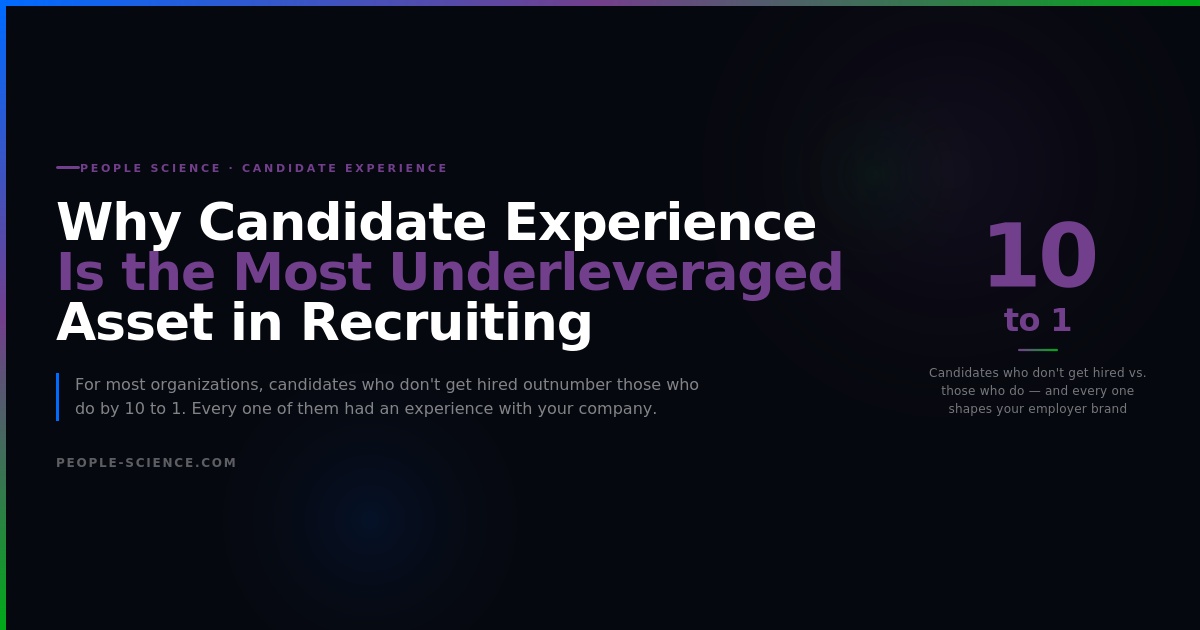
Read MoreHere’s a number that rarely gets discussed: for most organizations, the candidates who don’t get hired outnumber the ones who do by a factor of 10 to 1, or more. Every one of those candidates had an experience with your organization. They formed an impression about your responsiveness, your professionalism, your clarity of communication, and …
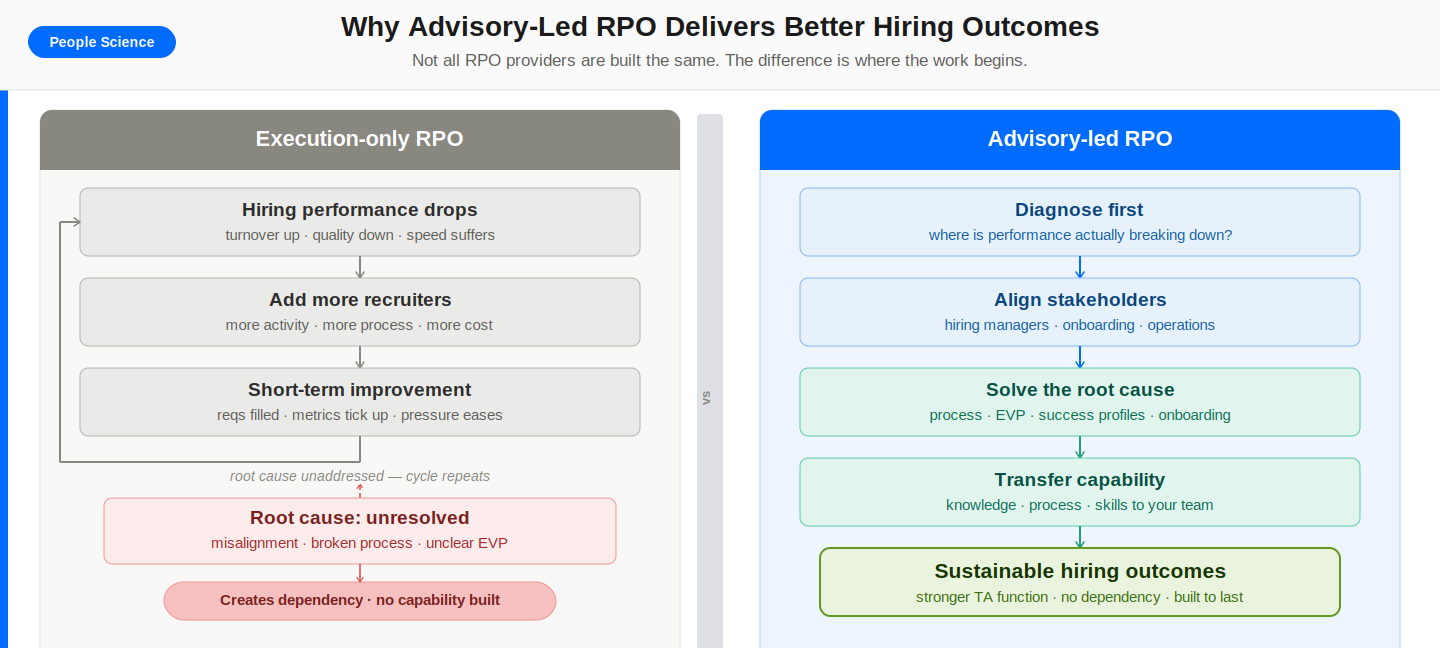
Read MoreAdvisory-led RPO delivers better hiring outcomes because it addresses the root causes behind recruiting challenges, not just the symptoms. Not all RPOs are built the same. Some providers are designed to execute. They bring recruiters, fill requisitions, and help organizations manage hiring volume. When the challenge is capacity, that model can work well. But when …
Read MoreThere’s a version of RPO that looks like success on the surface. Reqs get filled. Time-to-hire stays acceptable. Hiring managers stop complaining, at least for a while. Then something shifts. A wave of attrition hits. A new business unit opens. The market tightens. And suddenly, nobody can explain why the engine that worked six months …
Read More