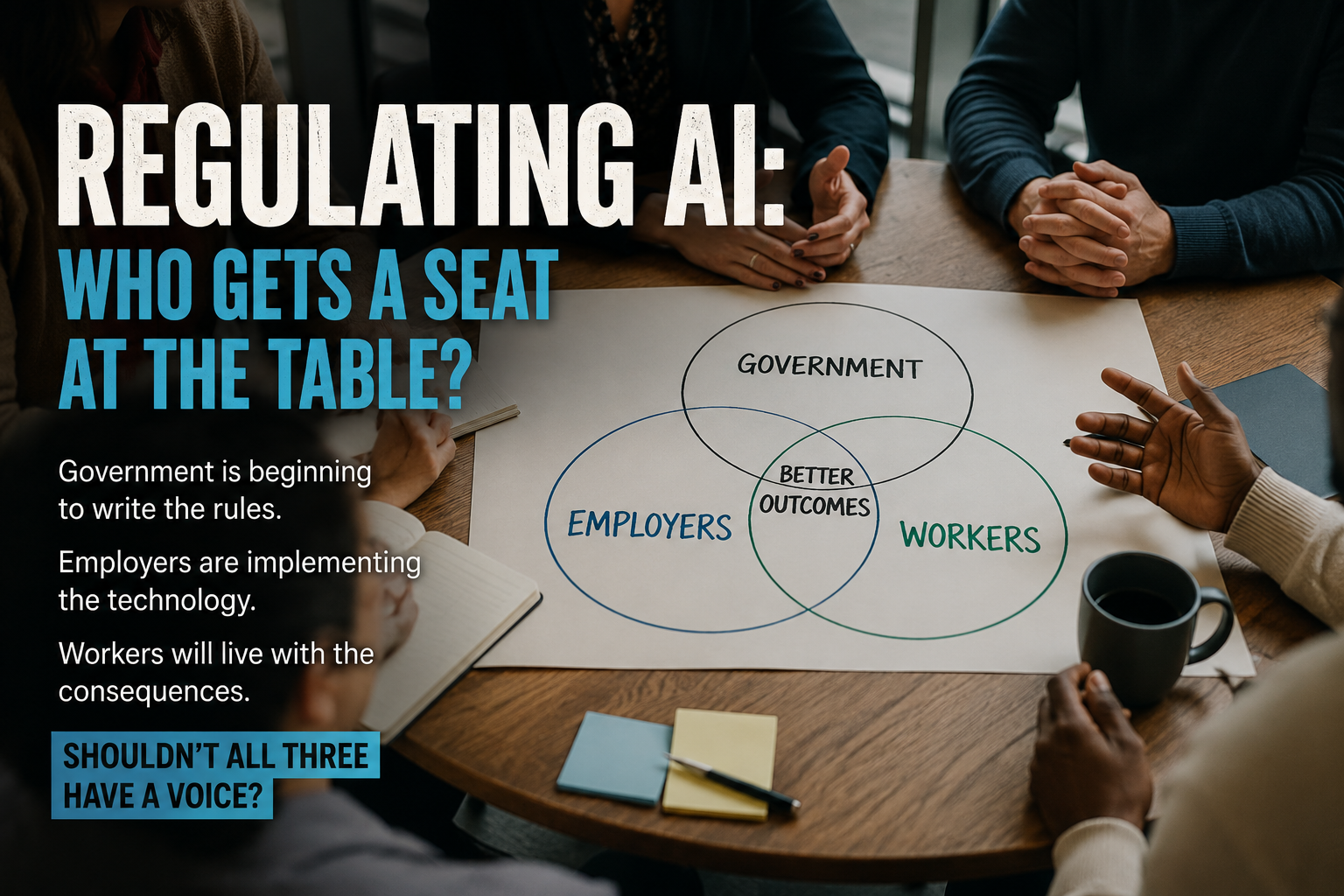
Government is beginning to write the rules. Employers are implementing the technology. Workers will live with the consequences. Shouldn’t all three have a voice?
Written by Christine Nichlos, CEO and Founder
AI regulation is beginning to take shape. The New World of Work is already taking shape. As AI changes how work gets done, state and federal policymakers are considering how—and how much—to regulate it. At the same time, employers must develop their own AI strategies, often while the rules themselves are still evolving.
This is where we are today. It won’t be where we are tomorrow.
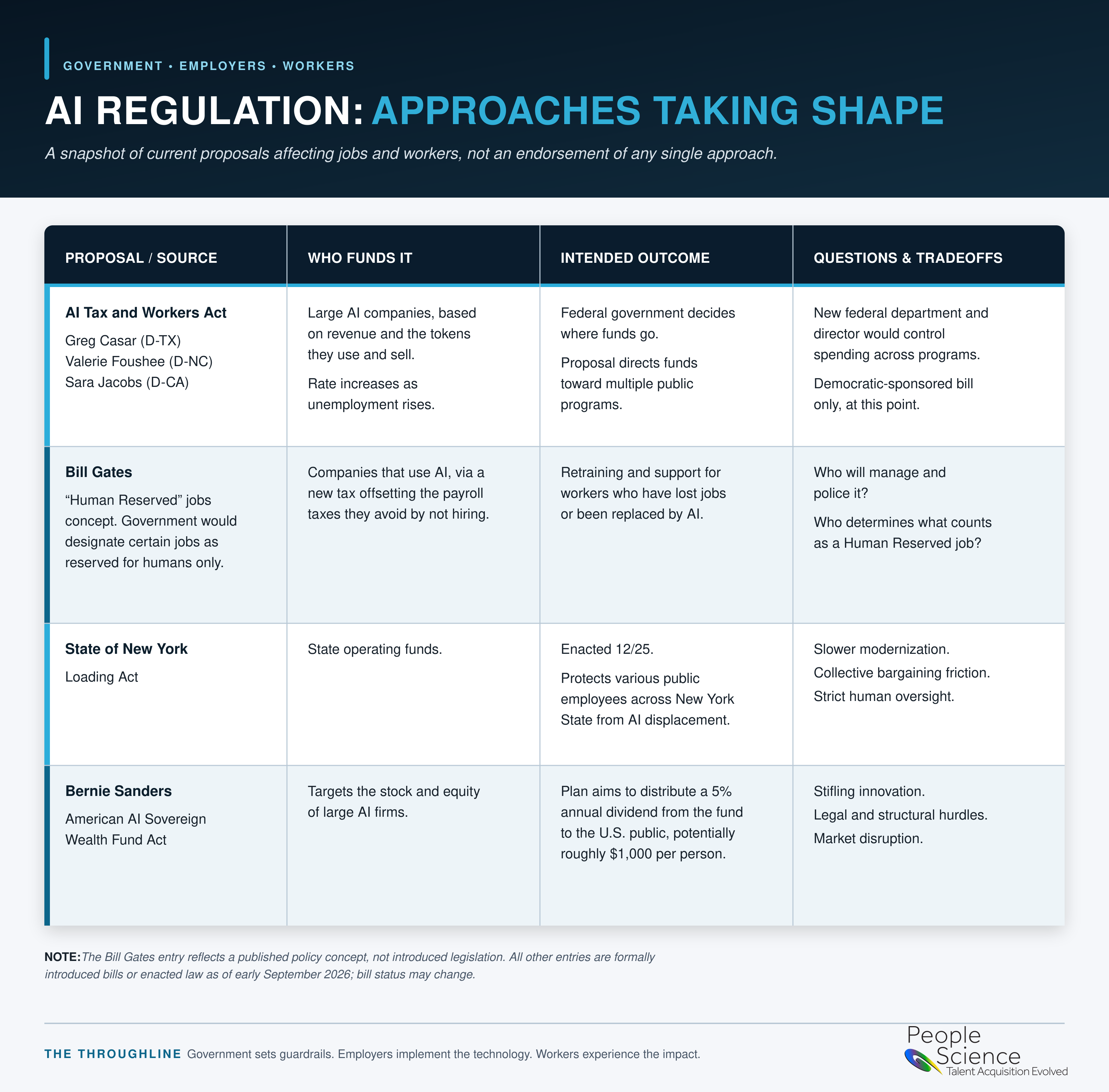
For example, the table below captures several of the AI regulation approaches taking shape now. It is intended as a snapshot of a rapidly evolving landscape, not an endorsement of any single approach.
Who Needs a Seat at the Table?
What may be missing from the AI regulation debate is enough involvement from the people who understand the work itself. Effective policy will require government, employers and workers at the same table. First, government has a responsibility to protect the public interest and establish appropriate guardrails. Meanwhile, employers understand where they actually deploy AI, how jobs are changing, and what is—and isn’t—practical. In turn, workers bring an essential perspective on how those decisions affect people and their livelihoods.
And within organizations, this may be an especially important moment for HR and Operations leaders to take the helm.
From AI Adoption to Work Transformation
In practice, AI transformation isn’t simply about adopting technology. It is about Work Transformation: determining what work should remain human, what can be augmented by AI, what can be automated, how roles will change, what new skills people will need, and how organizations prepare people for what comes next.
Moreover, that thinking is at the heart of the Work Architect™, a framework we’ve developed to help HR and Operations leaders map the journey from today’s work to tomorrow’s workforce.
Ultimately, as AI regulation policies continue to evolve, perhaps the question worth considering isn’t simply “Who should regulate AI?”
It’s “Who needs to be at the table to get it right?”